This weekends atmospheric river event continues to unfold. I travel to Santa Barbara in two days, hoping roads are dry, rivers have receded and the mud has been cleaned up.
This morning here in Northern California we have a textbook example of what is becoming the new normal, an atmospheric river fueled storm. If you look at the National Weather Service’s offshore satellite imagery, you will see the low-pressure center’s intensifying counterclockwise intensification. The familiar pinwheeling storm’s Milky Way spiral galaxy appearance is out of the ordinary, more worrisome is that this cyclonic event resembles a similar storm that hit Northern California last year.

Last night the National Weather Services in Monterey provided updated forecasts after evaluating the leading edge of this morning’s event. It must have been quite a debate among the meteorologists to have made the decision to issue a first ever in the history of the NWS warning for potential “hurricane force winds” slamming into the Big Sur coast. Both Highlands Peak and Coast Road stations have captured near hurricane velocity wind gusts of up to 72 mph (another 18 mph and we’d be right where they warned us not to be). But hold onto your hats because there is still much more severe weather predicted to come ashore before this event is over.
Writing a climate change comedy about an atmospheric river triggered landslide while contemporaneously being caught up in the middle of two powerful storms is my backgrounder on how imagination and the creative process adapts for screenplay the anthropomorphic climate emergency.
Don’t just roll up your sleeves and get to work using your imagination to create your story, break out your toolbelt, rain parka and emergency weather radio and witness our world’s existential crisis up close and firsthand.
I get up, I go to sleep then spend all my waking hours looking to construct characters that an audience will have their hearts broken over, real people that they will very much care for, people an audience has been enticed into hoping things turn out for the best for.
Bringing characters to life on the page, characters you can empathize with, people you care about, it is this being caught up in their problems where is located the richness of the comic experience.
I keep wanting to know why in the hell I haven’t heard of a pineapple express until now. I’d heard of drought before, but why are we just now being told about the risks of a megadrought? If the pineapple express doesn’t bring chills to your bones how about worrying about being clobbered by an atmospheric river? Forget everything you thought you knew about a once in one-hundred-year storm event because now NOAA, the National Oceanic and Atmospheric Administration has recalculated and now quantifies events as having a likelihood of being a once in one-thousand-year event— Godzilla sized storms slamming into the King Kong of states, the California dream ticket to paradise has morphed into a monstor storm tracking bullseye.
Enter the screenwriter who has a scrappy band from Brazil plunged into the storm-tossed story. In a bus the band is against all reason (of course because they are irrational creative types) trying to make their way north along the Big Sur coast highway. The setting becomes a resort. There is a hotel, restaurant, and saloon with a once thriving showroom that is now mothballed.
Once upon a time audiences had flocked here, but time and tastes changed, and the rugged central coast of Big Sur is a road too far, too twisty and now too prone to landslides to remain a viable show venue.
My cast will consist of the local oddball residents, the resort staff, Brazilian band, and the emergency road repair crew. To pull off the comeback of comebacks for this forlorn resort they’ll need to draw a mythical audience willing to brave the crumbling coast highway. All this madness happens in the midst of the resort struggling to stay open, to fight back against the cruel fate of fierce weather and to prevail against the odds.
I believe there are good reasons for making a comedy out of the destructive effects of powerful climate change fueled storms. The plot is based upon the actual physical possibility of an entire nightclub falling into the abyss, of there being a catastrophic landslide and the complete destruction of the resort and the sudden end to hopes and dreams of the people that have found themselves drawn to this corner of the world.
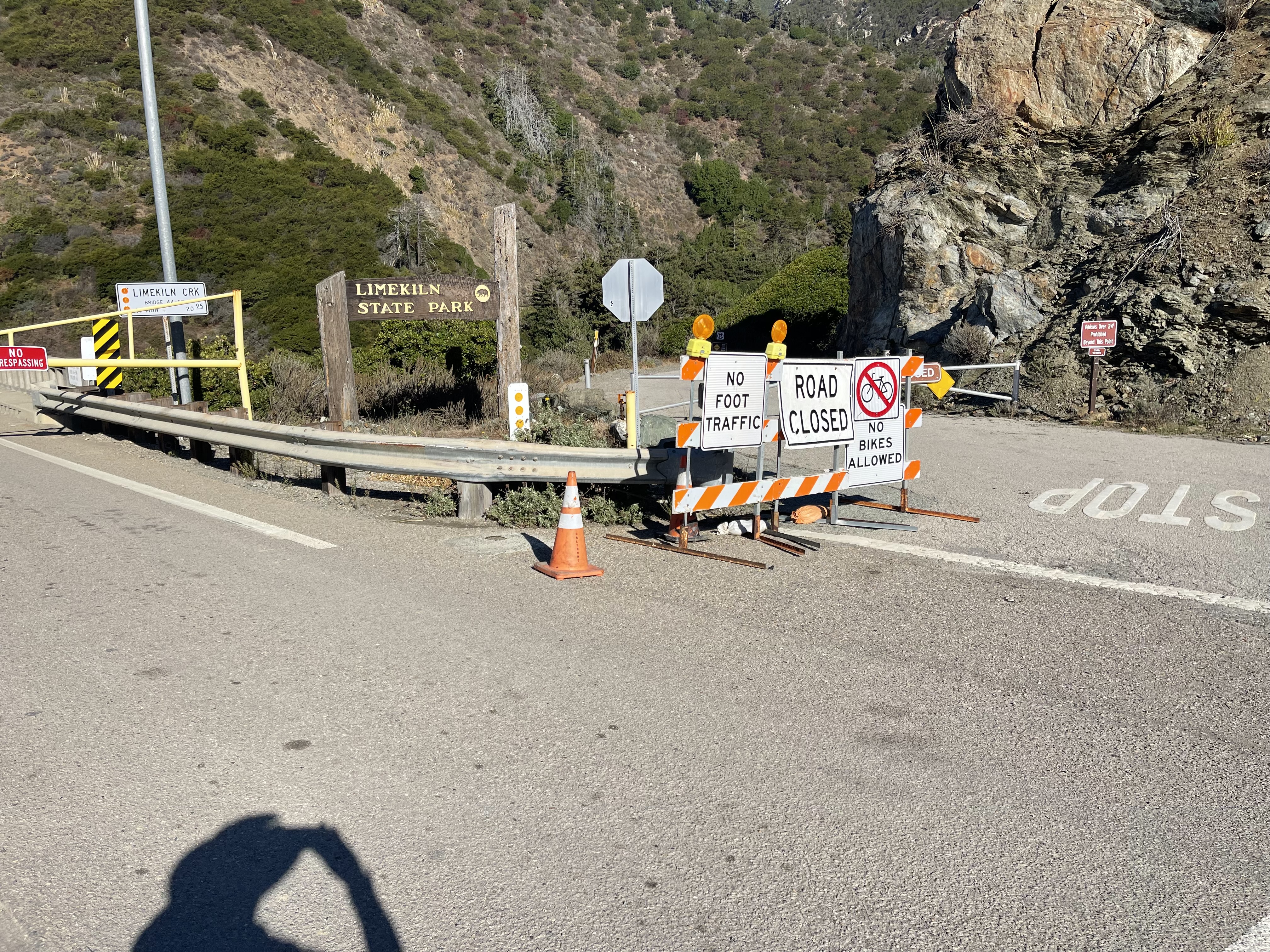
I had already put a landslide into the plot for this next script. In November we drove down to Big Sur to get a closeup look at the damage done by the previous year’s storms. I stuck a pin in the map and took photographs of the location. Most of the plot takes place in the week in the runup to the big show. I’ll need a landslide and building to collapse, but this isn’t a special effects dependent story, it is more like a cinematic murder; someone is killed but we don’t necessarily need to see the murder, we might see the body, maybe we just see the loss and the tragedy on the faces of the characters—
If I’ve got this half-right what we want to see is how the characters prevail against the odds, how they make good on what has been thrown at them, how they move off the dime, how the events change them, and how they plot and plan their recovery from the devastating effects of such a tragic loss when the once famous nightclub slides into the Pacific Ocean.
I am a believer in the importance of belonging. I see evidence of people seeking ground, to act in a manner that suggests they are grounded. In a very real sense, the human experience is to create a life that is tangible, that is predictable, that is reliable. We want to wake up in the morning and know the world we rely upon is there waiting for us. We want a car that starts, a friend we can call, and a job we can count on to keep a roof over our head and food on the table.
If any one piece of this ground we are making our stand on crumbles we are thrown into crisis, we will struggle to restore order to the chaos that has befallen our lives. The proper comic response to such a calamity is to have planted into the story the seeds of recovery, that most of the characters may overcome what has happened and set out on a path of hope and survival, of demonstrating resilience and ingenuity and to prevail against all odds.
A climate scientist has an important role to play, to tell it like it is, to warn and to support their predictions with facts. And I have a job to do too, to place people we can relate to, people like us, people we might imagine we know, and to provide a plausible path to recovery from the life altering events triggered by our warmer world.
Working title for the script, I got the name from a suggestion, some said I should call the screenplay Cliffhanger— that’s good enough for now, what I call a working title. That’ll do for the moment—


Excellent starting point, Dana. may the force be with you, and stay dry.